
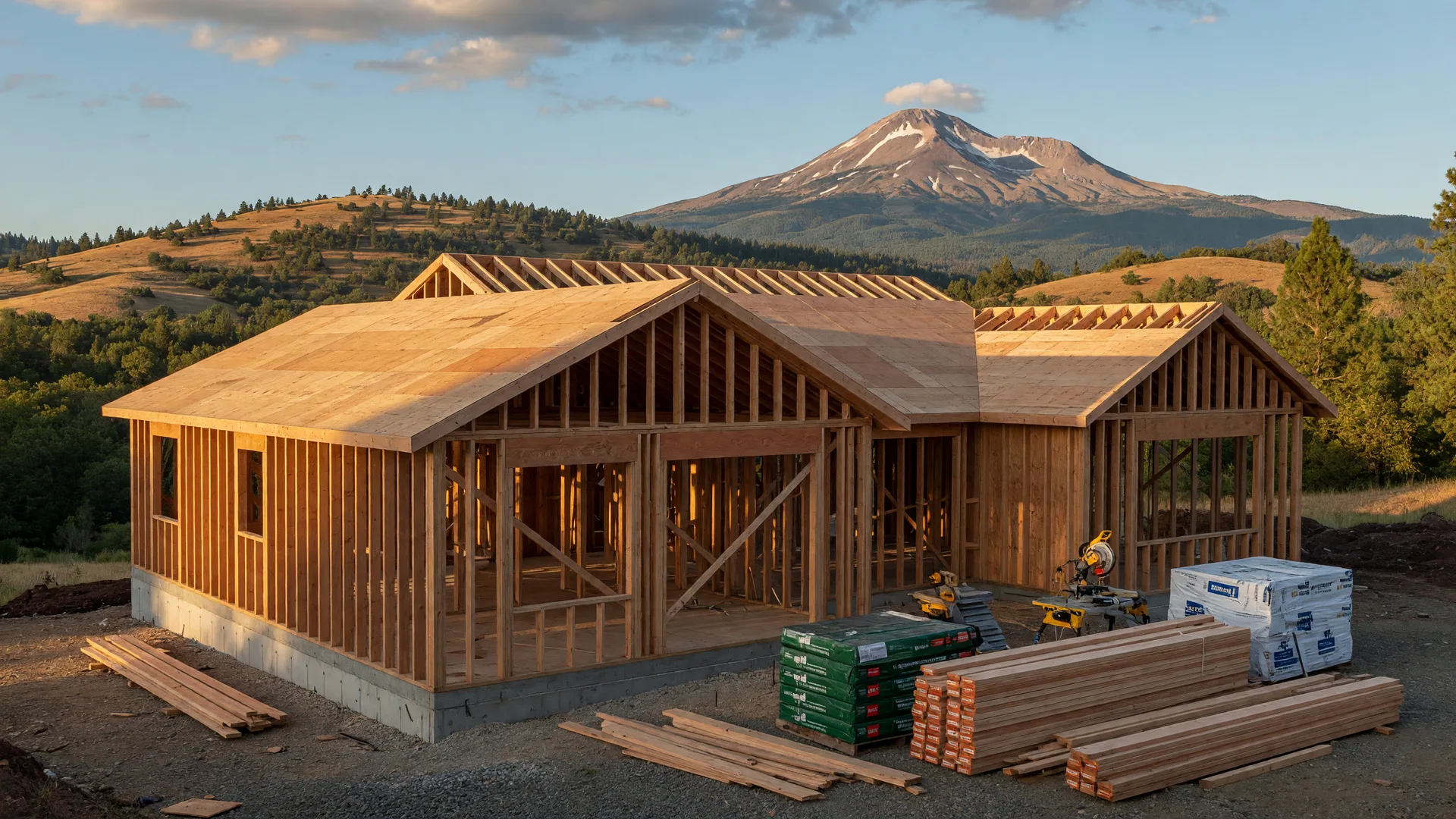
Buying a new construction home is an exciting process. You get to be the first person to live in a home that was built just for you, with finishes you chose, a floor plan that fits your life, and the peace of mind that comes with a builder's warranty. But if you have never done it before, the process can feel unfamiliar. It is different from buying an existing home in ways that matter, and knowing what to expect makes all the difference.
I have walked dozens of buyers through new construction communities across Medford, Eagle Point, Grants Pass, and Jacksonville. I have seen the process from both sides, having worked as a mortgage lender earlier in my career before moving fully into real estate. That background gives me a unique perspective on the financing pieces, the builder contracts, and the timelines that catch first-time new-construction buyers off guard. Here is the step-by-step guide I share with every buyer who is considering a new build in Southern Oregon.
Get Pre-Approved Before You Start Looking
This is the single most important step, and I recommend doing it before you set foot in a model home. Getting pre-approved with a local lender tells you exactly what price range you can work with, and it signals to the builder's sales team that you are a serious buyer. In a market where desirable lots and quick move-in homes are selling steadily, being pre-approved means you can move quickly when you find the right home.
As of mid-2026, mortgage rates for 30-year fixed loans have been ranging in the upper 5 percent to low 7 percent range depending on the loan program and your credit profile. Some builders offer rate buydowns or closing cost incentives that can make financing more attractive, especially if you use their preferred lender. I always recommend comparing the builder's lender offer against a local independent lender so you know you are getting competitive terms.
Oregon also has excellent down payment assistance programs through Oregon Housing and Community Services. The state's Down Payment Assistance Program can provide qualified first-time and first-generation buyers up to $60,000, or 20 percent of the purchase price, whichever is less. Their Flex Lending Program combines a fixed-rate mortgage with down payment assistance equal to 4 or 5 percent of the loan amount. If you are a first-time buyer, these programs can make new construction more accessible than you might think.
Tour Communities with a Buyer's Agent
Here is something many buyers do not realize. When you walk into a builder's sales center without a real estate agent, the on-site agent represents the builder. Their job is to sell the builder's homes, and everything you discuss with them is shared with the builder's team. Having your own buyer's agent means someone is looking out for your interests from day one.
I encourage my buyers to visit several communities before narrowing down their options. Southern Oregon has a strong range of active builders right now. DR Horton builds at Addysen Park in South Medford with pricing from the mid-$300,000s. Hayden Homes has Ponderosa Place in North Medford and Cedar Landing in East Medford with single-story options and smart design tools. Holt Homes builds larger homes in Eagle Point with premium finishes starting around $500,000. And PacTrend, a local builder with nearly 50 years in Southern Oregon, has Autumn Hills in East Medford with hillside views. Each one offers something different. Walk the models, feel the neighborhoods, and see which builder's style matches your priorities.
When you visit, ask about the current phase of development. Builders release homes in phases, and the best lots typically sell first. Also ask about builder incentives. I have seen Hayden Homes offer up to $25,000 in incentives on select homes, and DR Horton frequently has promotions on quick move-in inventory.
Understand the Builder Contract
The builder's purchase agreement is different from the standard Oregon Real Estate Forms (OREF) contract used for existing home sales. Builder contracts are written to protect the builder's interests, and they often have more limited contingency periods, different earnest money terms, and language around construction timelines that you need to understand before you sign.
Here are the key items to look for in any builder contract. The earnest money deposit is typically 1 to 3 percent of the purchase price and is due within a few business days of signing. Make sure the contract clearly states the conditions under which your earnest money is refundable. Most builder contracts allow you to back out during the inspection period or if financing falls through, but the timelines are often shorter than what you get in a resale transaction.
Pay attention to the estimated completion date and any escalation clauses. Some contracts include provisions that allow the builder to adjust the price if material costs rise before construction begins. Know what is in the contract before you sign, and have your agent review every page.
Choose Your Lot, Floor Plan, and Upgrades
Once you have selected a community and signed the contract, the fun part begins. Most builders have a design center where you select everything from countertops and cabinetry to flooring, lighting, and paint colors. Some builders, like Hayden Homes, offer an online visualization tool that lets you see how different choices affect the look and the price in real time.
A few things I tell every buyer heading into the design center. First, set your budget for upgrades before you walk in. It is easy to get carried away when you see all the options. Second, focus your upgrade budget on things that are expensive to change later, like flooring, countertops, and cabinets. Things like light fixtures and faucets can be swapped out relatively inexpensively down the road. Third, ask about structural options that affect the floor plan itself, like adding a bedroom, extending a patio, or upgrading to a three-car garage. Those decisions must be made early, often before construction begins.
One more thing. The lot you choose matters just as much as the floor plan. A corner lot gives you more yard space but less privacy. An interior lot may feel quieter and more protected. A lot that backs to open space or a greenbelt is often worth a premium. Walk the community and picture yourself living there before you commit to a specific location.
Navigate the Construction Phase
For a production home in a development, the construction phase typically takes 6 to 12 months depending on the builder, the complexity of the home, and the time of year. This is the longest stretch of the process, and it requires patience. Weather delays, material shortages, and subcontractor schedules all affect the timeline.
During construction, I recommend scheduling periodic site visits. Most builders allow you to walk the property at certain milestones, such as after the foundation is poured, after the framing is complete, and after the rough-in for electrical and plumbing. These visits let you see the work behind the walls and catch any issues early. Bring your agent and, if possible, your inspector to these walkthroughs.
Speaking of inspections, this is a topic that deserves special attention. In a resale home, you have a standard inspection period where you hire an inspector to evaluate the entire property. In new construction, the process is different. Some builders allow third party inspections during construction, and I strongly recommend requesting that right in the contract. Others restrict inspections until after the home is complete, at which point you schedule a final walkthrough and a new construction inspection. Either way, an independent inspector who knows new construction is worth every penny. They catch things that neither you nor your agent will see.
The Final Walkthrough and Closing
When construction is complete, the builder will schedule a final walkthrough with you. This is your chance to go through the home room by room with a fine-tooth comb. Test every outlet, every faucet, every appliance, every door, every window. Make sure the finishes match what you selected in the design center. Look for paint touchups, gaps in trim, and any signs of rushed finishing work.
This is also when your independent inspector should do a final inspection. They will identify items that need attention before you close. The builder will typically create a punch list of items to fix, and those fixes should be completed before or shortly after closing, depending on the agreement. Do not feel pressured to close until the items that matter most to you are resolved.
At closing, you will sign the final documents, transfer the funds, and receive the keys. This is also when your warranty documents are finalized. Builders typically offer a 1-year workmanship warranty, a 2-year systems warranty, and a 10-year structural warranty. Make sure you understand what is covered, how to submit a warranty claim, and what the process looks like after you move in.
What I wish every buyer knew before buying new construction
After guiding buyers through this process for many years, here are the insights I find myself repeating most often.
The builder's agent is not your agent. This is the most common misunderstanding I encounter. The person in the sales center is employed by the builder to sell homes. They are professionals and they will treat you well, but their loyalty is to the builder. Having your own agent means someone is protecting your interests through every phase of the process, from the initial walkthrough to the final punch list.
Register your agent on your first visit. Builders have strict policies about buyer representation. If you visit a community without your agent and then try to bring them in later, the builder may not recognize them as your representative. Always visit a new construction community with your agent on the first trip. That one decision can save you a lot of frustration.
Quick move-in homes can be a great value. Builders often offer incentives on homes that are already under construction or nearing completion. These quick move-in homes may already have upgraded finishes installed, and the builder may offer a discount or closing cost credit to move the inventory. If you have flexibility on timing, these can be a smart play.
Plan for additional costs after closing. Your new home will be move-in ready, but you will still need window coverings, landscaping in the backyard (most builders only landscape the front), and basic items like a hose, trash cans, and a mailbox. The builder may include some of these items, but ask specifically what is and is not included before you budget.
New construction is not perfect, and that is okay. Every new home has minor issues. The builder's warranty exists to address them. Be patient, communicate clearly with the builder's customer service team, and keep detailed records of every issue you find, including photos and dates. A well maintained warranty relationship will serve you well in your first year of homeownership.
Why 2026 is a strong time to buy new construction in Southern Oregon
The new construction market in Southern Oregon is in a healthy place right now. Buyers have more choices than they did a few years ago, with multiple builders active across different price points and locations. Mortgage rates have eased from their 2023 peaks, with 30-year rates now in the upper 5 percent to low 7 percent range, and some experts forecast rates could dip further toward 6 percent by year end.
Oregon's statewide down payment assistance programs make homeownership more accessible than ever, especially for first-time buyers. And the Rogue Valley continues to attract new residents drawn by the mild climate, outdoor lifestyle, and relative affordability compared to larger West Coast metros.
If you have been considering new construction, now is a great time to educate yourself on the process and start exploring your options. The communities I mentioned earlier are all active and worth a visit. DR Horton's Addysen Park in South Medford, Hayden Homes' Ponderosa Place and Cedar Landing, Holt Homes' Eagle Point community, and PacTrend's Autumn Hills in East Medford give you a range of builders, price points, and locations to compare.
Bring someone who knows the process, ask the right questions, and take your time. A new construction home is a big investment, and the more informed you are going in, the smoother the entire journey will be from the first model home tour to the moment you turn the key in your front door.
Let me guide you through the process step by step
I have helped dozens of buyers navigate new construction purchases in Southern Oregon, from the first visit to the builder's sales center through the final walkthrough and closing. I know the builders, the communities, the contracts, and the questions you need to ask. Whether you are just starting to explore or ready to find your lot, I would love to help you make a confident decision.

Lisa Sears, REALTOR, eXp Luxury
Serving Southern Oregon