
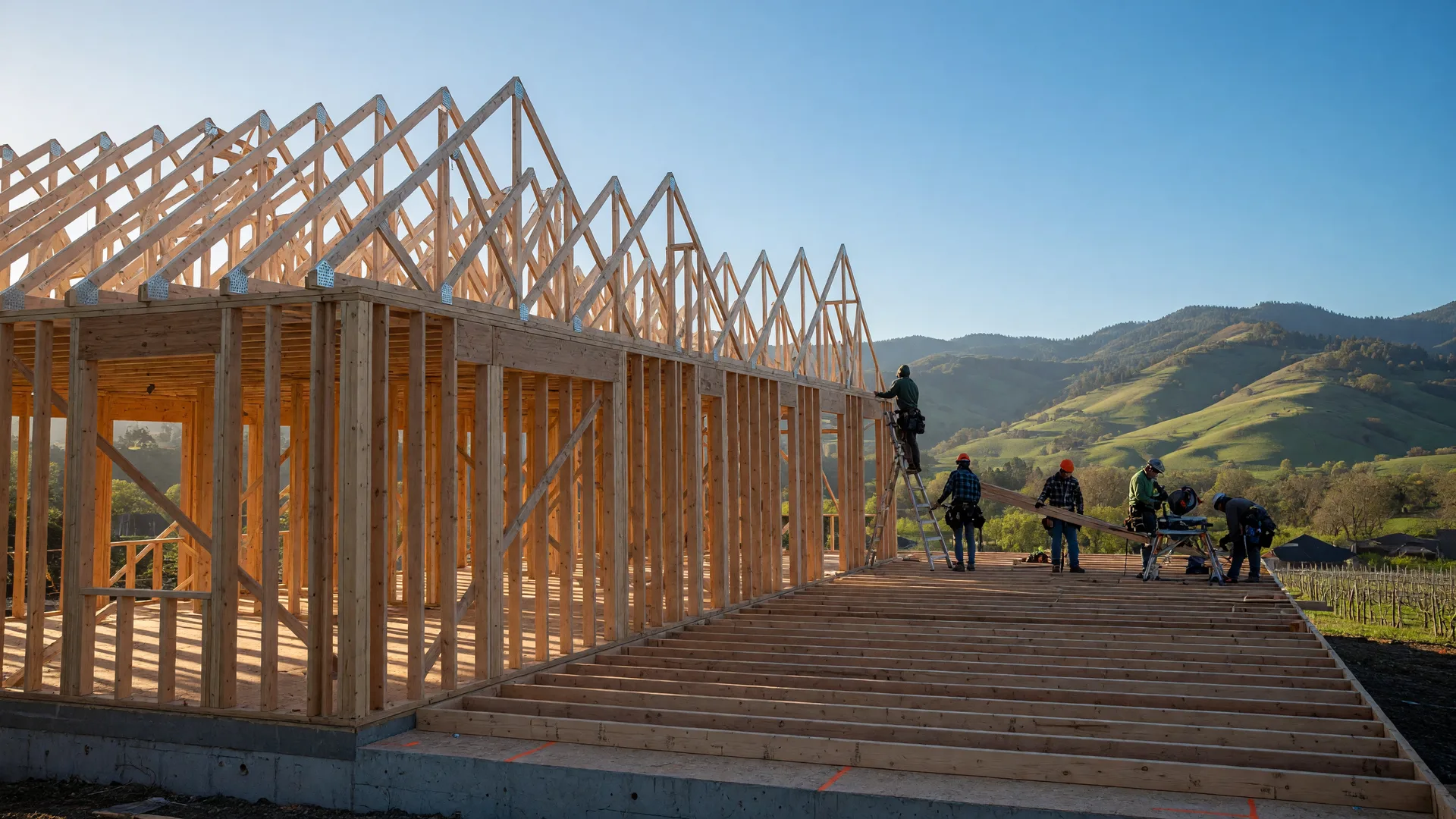
If you are shopping for a home in Southern Oregon right now, you have probably noticed something: there is a lot of new construction going up. From master-planned communities in East Medford to custom builds in Eagle Point and new subdivisions in Grants Pass, buyers today have more options than they have had in years. But the question I hear most often is a simple one: should I buy new construction or an existing home?
The answer depends on your timeline, your budget, your tolerance for decisions, and what kind of home you really want. This guide walks through the key differences between buying new construction and buying an existing home in our market, so you can make the choice that fits your life.
Two very different buying experiences
The most obvious difference is timeline. When you buy an existing home, you make an offer, negotiate, and close in 30 to 60 days. You walk in with the keys and you are home. With new construction, the timeline stretches out. A production home from a builder like D.R. Horton or Holt Homes typically takes 6 to 12 months from contract to closing. A fully custom build can take 12 to 18 months or more, especially when you factor in permitting and design time.
That longer timeline is not necessarily a bad thing. It gives you time to plan your move, save for furnishings, and get your finances in order. But if you need to relocate quickly for a job or a school year, new construction may not be your best option.
The second big difference is choice. With new construction, you often get to select finishes, flooring, cabinets, countertops, and fixtures. You make dozens of decisions, but the result is a home that feels like yours from day one. With an existing home, you trade that control for convenience. The home is already there. You can see exactly what you are getting, walk the neighborhood, and move in quickly. The tradeoff is you may need to paint, update, or renovate down the road.
The third difference is pricing and negotiation. Existing homes are typically negotiated on price, with offers and counteroffers based on market conditions, inspection findings, and comparable sales. New construction homes are usually priced at a fixed base price with a list of optional upgrades. Builders may offer incentives like closing cost assistance or rate buydowns, especially when the market is slower. But the base price tends to be firmer than what you would find in a resale transaction.
What to expect from contract to closing
In Southern Oregon, the new construction timeline looks roughly like this for a production home:
- Month 1: Contract signed, design center appointments, selections made. Earnest money deposited, financing secured.
- Months 2-3: Site preparation, foundation poured, rough framing begins. This is when you see the home start to take shape.
- Months 4-6: Roofing, windows, electrical and plumbing rough-ins, insulation, drywall. The home becomes enclosed and starts looking finished.
- Months 7-9: Interior finishes, cabinetry, flooring, paint, fixtures, appliances installed. Final walkthrough and punch list.
- Month 9-12: Closing. Final inspection, certificate of occupancy issued, keys handed over.
By contrast, buying an existing home follows a much tighter rhythm. Offer to acceptance usually takes a few days. The inspection period is typically 7 to 14 days. Appraisal and financing take 30 to 45 days. You aim for a closing date that works for both sides, and you are in.
More stages, more peace of mind
With an existing home, you typically get one comprehensive inspection. A qualified inspector goes through the property from foundation to roof and gives you a report. You then decide whether to negotiate repairs, ask for credits, or walk away.
New construction offers something different: the chance to inspect at multiple stages. Most experienced buyers schedule three inspections:
- Pre-foundation inspection. The soil is prepared, the footings are in, but nothing is poured yet. This is your chance to verify that the site work meets code and the foundation design is sound.
- Pre-drywall inspection. This is the most critical one. The framing, plumbing, electrical, and HVAC rough-ins are all visible before the drywall goes up. Any issues can be corrected easily at this stage. Once the walls are closed, fixing something costs much more.
- Final walkthrough and closeout inspection. Before closing, you go through every room checking finishes, appliances, flooring, cabinets, plumbing fixtures, and all the details you selected. This is your last chance to flag anything that needs fixing.
One thing I always tell my clients: hire your own inspector. Not the builder's inspector, not someone the builder recommends. Your inspector works for you. They catch things the builder's team might miss, and they give you the confidence that your new home is built right. The Oregon Construction Contractors Board recommends this too, and it is money well spent.
The protection that comes with new construction
This is where new construction really shines. Oregon law requires builders to provide warranties on new homes. The typical structure is a graduated system that gives you coverage where it matters most:
- Year one: The builder covers workmanship and materials. Any defects in how the home was put together, including finishes, fixtures, and systems.
- Year two: Coverage shifts to major systems. Plumbing, electrical, and HVAC are covered if they fail due to defects.
- Years three through ten: Structural warranty. The foundation, framing, and load-bearing elements are covered for a full decade. This is the most valuable protection and one that no existing home can offer.
I also recommend scheduling what is called an 11-month warranty inspection. Right before the builder's one-year workmanship warranty expires, have your inspector come back through. By then, any settlement cracks, nail pops, or system issues will have appeared. The builder is still on the hook to fix them, and you catch everything before the warranty window closes.
Existing homes do not come with a builder warranty. You can buy a home warranty from a third-party provider, and on certain properties it is worth considering. But the coverage is not as strong, and it costs you out of pocket. New construction's warranty is baked in and covers the things that matter most.
Matching the option to your lifestyle
Here is how I think about it with my clients:
New construction is a great fit if: You want a home that no one has lived in before. You like the idea of choosing your own finishes, colors, and fixtures. You have flexibility on your move-in date. You value energy efficiency and modern building standards. And you want the peace of mind that comes with a structural warranty.
An existing home might be a better fit if: You need to move quickly. You prefer an established neighborhood with mature trees and landscaping. You want to see exactly what you are getting without guessing at what the finished product will look like. You are comfortable with the idea of updating or renovating over time. Or you want to avoid the decision-making process that comes with selecting every finish in a new build.
There is no wrong answer. It comes down to your priorities. I have worked with buyers who went into the process sure they wanted new construction and ended up falling in love with a resale. And I have worked with others who started looking at existing homes and decided the wait for new construction was worth it.
Why you need your own agent either way
Whether you are buying new construction or an existing home, having your own representation is critical. In a new construction transaction, the sales agent at the builder's model home represents the builder, not you. That means their loyalty, legally and practically, is to the seller. You need someone whose only job is to look out for your interests through the design process, the contract review, the inspections, and the closing.
A buyer's agent who knows new construction can help you understand what is negotiable in the contract, what upgrades are worth the cost, and what the builder's track record looks like in our market. They can recommend independent inspectors, help you navigate the warranty process, and make sure you are not missing any steps. And here is something many buyers do not realize: in most new construction transactions, the builder pays the buyer's agent commission, just like in a resale. So it does not cost you anything extra to have your own representation. It just gives you someone on your side.
The right home is out there
Southern Oregon is a special place to buy a home right now. Whether it is a brand new build in Addysen Park in Medford, a custom home on your own land in Eagle Point, a Northridge home in Grants Pass, or a classic existing home with mature landscaping in Jacksonville, the options are real and the quality of life here is hard to beat.
The key is knowing what matters most to you and finding the home that matches it. I have been helping buyers in this community for over 25 years, and I love being able to walk people through this decision. Whether you end up in new construction or an existing home, the goal is the same: a place that feels right when you walk through the door.
Let's talk about what you are looking for
I help buyers across Medford, Eagle Point, Grants Pass, Jacksonville, and the entire Rogue Valley explore both new construction and existing homes. Whether you are just starting to think about buying or you are ready to make a move, I would love to hear what you are looking for and help you find the right fit.

Lisa Sears, REALTOR®, eXp Luxury
Serving Southern Oregon