
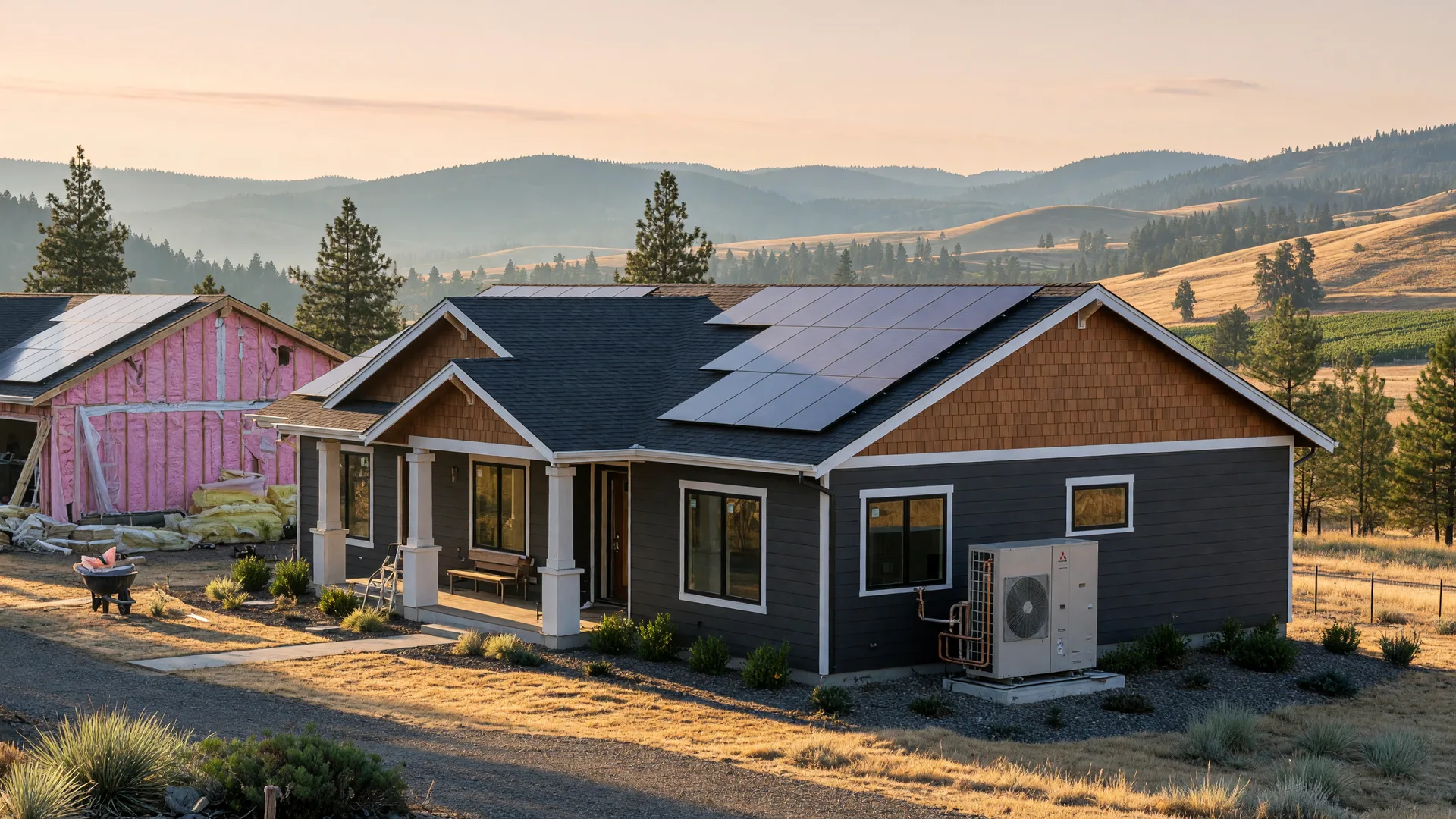
If you are looking at new construction homes in Southern Oregon, there is an important change coming to the state's building codes that you need to know about. The 2026 Oregon Residential Specialty Code, adopted in February of this year, includes a new requirement for heat pumps in newly constructed homes that have air conditioning. This change takes effect on October 1, 2026, with a six-month phase-in period before it becomes mandatory around April 2027.
This is not a radical shift, but it does affect how new homes are built, how much they cost to operate, and what you can expect from your heating and cooling system. I have been following this code update closely because it directly impacts the new construction communities I work with across Medford, Grants Pass, Eagle Point, and Jacksonville. Here is a clear explanation of what the change means, what it does not mean, and how it affects you as a buyer.
What the 2026 code actually says about heat pumps
The specific provision is Section N1105.8 of the 2026 Oregon Residential Specialty Code. Here is the key language. In any new dwelling where split-system air conditioning is installed, the outdoor condensing unit must have heat pump operation, providing both heating and cooling as first-stage heating. The minimum efficiency standard is an HSPF2 rating of 7.55, which corresponds to a coefficient of performance of 2.2.
In plain English, if a new home comes with central air conditioning, that same system must also be capable of providing heat through heat pump operation. And the unit must meet a baseline efficiency level that ensures it actually saves energy compared to older technologies.
The Oregon Building Codes Division adopted this change on February 18, 2026, after approval by the Residential and Manufactured Structures Board. The full 2026 ORSC is based on the 2024 International Residential Code with Oregon-specific amendments, and the six-month phase-in period starts October 1, 2026. Homes permitted after the phase-in period ends around April 2027 will need to comply with the new standard.
What this code change does NOT do
There has been some confusion online about this code update, so let me be clear about what it does not require.
It is not a gas ban. This is the most important clarification. The code does not prohibit natural gas furnaces or any other heating source. Gas furnaces are still allowed as supplemental or backup heating. The heat pump is required as the first-stage or primary heating source when air conditioning is installed, but gas systems can complement it. If you prefer a gas cooktop or gas fireplace, those are unaffected.
It only applies when air conditioning is installed. If a new home is built without central air conditioning, the heat pump requirement does not apply. That said, most new construction homes in Southern Oregon include air conditioning, especially with our summer temperatures regularly reaching the 90s, so in practice the requirement will apply to the majority of new builds.
It does not apply to existing homes or HVAC replacements. This code only governs new construction. If you own an older home and need to replace your furnace or air conditioner, there is no requirement to install a heat pump. The code deals with new dwellings only.
It does not apply to homes permitted before the code takes effect. Builders who pull permits before the mandatory date will build under the current 2023 Oregon Residential Specialty Code. This creates a transition window where some homes in a community may have different HVAC systems depending on when their permits were issued.
Why Oregon adopted the heat pump requirement
Oregon has been steadily tightening its residential energy codes for years. The 2023 code, which is the current code through the phase-in period, already required high efficiency HVAC equipment with minimum 94 to 95 percent AFUE for gas furnaces or air source heat pumps with HSPF 10.0 and SEER 16.0 ratings. The 2026 update builds on that foundation by ensuring that any home with air conditioning also uses that system for heating, rather than relying on a separate, less efficient system.
From a policy perspective, the goal is straightforward: reduce energy consumption in new homes by using the most efficient available technology. Heat pumps move heat rather than generating it through combustion, which makes them significantly more efficient than resistance electric heat and competitive with gas furnaces, especially in Oregon's moderate climate. The Oregon Department of Energy has estimated that heat pump requirements in new construction can cut heating energy use by 30 to 50 percent compared to standard electric resistance systems.
How the heat pump code affects new construction buyers
For buyers considering new construction in Southern Oregon, this code change brings both benefits and a few things to watch for.
Lower utility costs over time. Heat pumps are highly efficient in climates like the Rogue Valley, where winter temperatures rarely drop below freezing for extended periods. A modern cold climate heat pump can extract heat from outdoor air even when temperatures are in the teens, and it delivers that heat at a fraction of the cost of electric resistance heating. For a typical new home, this could mean annual savings of several hundred dollars on heating bills compared to older electric systems.
Built-in cooling and heating from one system. A heat pump is essentially an air conditioner that can run in reverse. One piece of equipment handles both your summer cooling and your winter heating. This simplifies maintenance and means one system to repair instead of two.
Potentially higher upfront costs. Heat pump systems can cost more to install than a standard air conditioning unit paired with a gas furnace, especially when the home also requires a backup heating source for very cold days. However, builders are incorporating these costs into their base pricing, and the efficiency savings typically offset the premium over a few years of ownership.
Ductwork design matters. Heat pumps generally deliver air at a lower temperature than gas furnaces, so proper duct sizing and layout are critical for comfort. Reputable builders in Southern Oregon already design their duct systems to accommodate efficient airflow, but it is worth asking your builder about their duct design approach, especially in two-story homes where temperature balance between floors can be an issue.
How Southern Oregon builders are handling the transition
I have been talking with builders and sales teams across the Rogue Valley to understand how they are preparing for the code update. The response has been practical and measured. Most of the major builders active in our area, including DR Horton, Hayden Homes, Holt Homes, and PacTrend, are already using high efficiency HVAC equipment in their new homes. The transition to heat pumps is a relatively small adjustment for builders who already spec efficient systems.
In communities like DR Horton's Addysen Park in South Medford, Hayden Homes' Ponderosa Place in North Medford and Cedar Landing in East Medford, Holt Homes' Eagle Point community, and PacTrend's Autumn Hills in East Medford, buyers can expect to see heat pump systems included as standard equipment in homes permitted after the code takes effect. Some builders may offer gas furnace options as a backup heat source paired with the heat pump, giving homeowners the flexibility of dual fuel operation.
If you are buying a home that is permitted before the phase-in period but closes afterward, the builder will build under the current code. Your home may have a traditional gas furnace and separate air conditioner. This is not a problem, it is just a different system configuration. Make sure you understand which code year applies to your specific home and what type of HVAC system is included.
The bigger picture: energy efficiency in Southern Oregon new construction
The heat pump requirement is part of a broader trend in Oregon's residential building codes that has been unfolding over the past several code cycles. The 2023 code already raised the bar for insulation, window performance, air sealing, and mechanical ventilation. The 2026 code continues that trajectory with a focus on the HVAC systems themselves.
For buyers, this is good news. New homes built under Oregon's modern codes are among the most energy efficient in the country. Lower utility bills, better indoor air quality, and more consistent comfort are the direct results of these requirements. And in a region where summers are getting warmer and winters bring chilly mornings, an efficient heating and cooling system makes a real difference in everyday living.
I also want to mention that many new construction communities are pairing these efficient systems with other features that reduce long term costs. Energy Star certified appliances, LED lighting throughout, low E windows, and improved insulation are all standard in most new homes today. When you combine a tight building envelope with a high efficiency heat pump, you get a home that costs significantly less to operate than a typical resale home from the 1990s or early 2000s.
Questions to ask your builder about the HVAC system
When you visit a new construction community and talk to the sales team, here are the specific questions I recommend asking about the heating and cooling system.
Which code year is this home permitted under? If the permit was pulled under the current 2023 code, the HVAC setup will be different from one permitted under the 2026 code. Know which one applies to your home.
What type of heating system is included? If it is a heat pump, what is the SEER and HSPF rating? Higher numbers mean better efficiency. Look for SEER 16 or above and HSPF 10 or above for good performance in our climate.
Is there a backup or supplemental heat source? In colder parts of the Rogue Valley, especially at higher elevations, a heat pump may need backup heat for the coldest days. Ask whether the home includes electric resistance backup, a gas furnace, or relies solely on the heat pump.
Is the ductwork designed for heat pump airflow? Heat pumps move more air at a lower temperature than gas furnaces. Ducts that are undersized or poorly laid out can make a heat pump home feel drafty or unevenly heated. Ask about the duct design and whether it was sized specifically for a heat pump system.
What is the warranty on the HVAC equipment? Most builders offer a 1-year workmanship warranty on mechanical systems and the manufacturer's warranty on the equipment itself, which is typically 5 to 10 years for compressors and parts. Confirm what is covered and for how long.
Can I choose a different system? Some builders offer optional upgrades or alternative system configurations. If you have a strong preference, ask whether the builder can accommodate it, even if it means paying a premium.
What this means for your new construction home search
Oregon's new heat pump requirement is a meaningful update to the residential building code, but it is not a dramatic departure from how quality new homes are already built in Southern Oregon. The major builders in our area are already using efficient HVAC systems, and the transition to heat pumps will be a natural step for most of them.
For buyers, the key takeaway is that new construction homes permitted after the code takes effect will come with efficient heat pump systems that provide both heating and cooling in one package. These homes will cost less to operate than older homes, and they will meet Oregon's already high standards for energy performance. If you are buying a home that is permitted before the phase-in date, you will get the current system configuration, which is still highly efficient by national standards.
The most important thing is to ask questions and understand exactly what is included in your home. A good builder will be transparent about the HVAC system, the code requirements, and how the home will perform in all four seasons. And having your own agent with you through the process means someone is looking out for your interests from the first visit to the final walkthrough.
If you are exploring new construction in the Rogue Valley and want to understand how these codes affect specific communities, I am happy to help. I work with buyers across Medford, Grants Pass, Eagle Point, and Jacksonville, and I know the builders, the communities, and the details that matter most when you are making this decision.
Let me help you find the right home and the right builder
I have been guiding buyers through new construction purchases in Southern Oregon for over 30 years. I know the building codes, the builders, the communities, and the questions you should be asking. Whether you are just starting your research or ready to visit model homes, I would love to be your guide through the process.

Lisa Sears, REALTOR, eXp Luxury
Serving Southern Oregon