
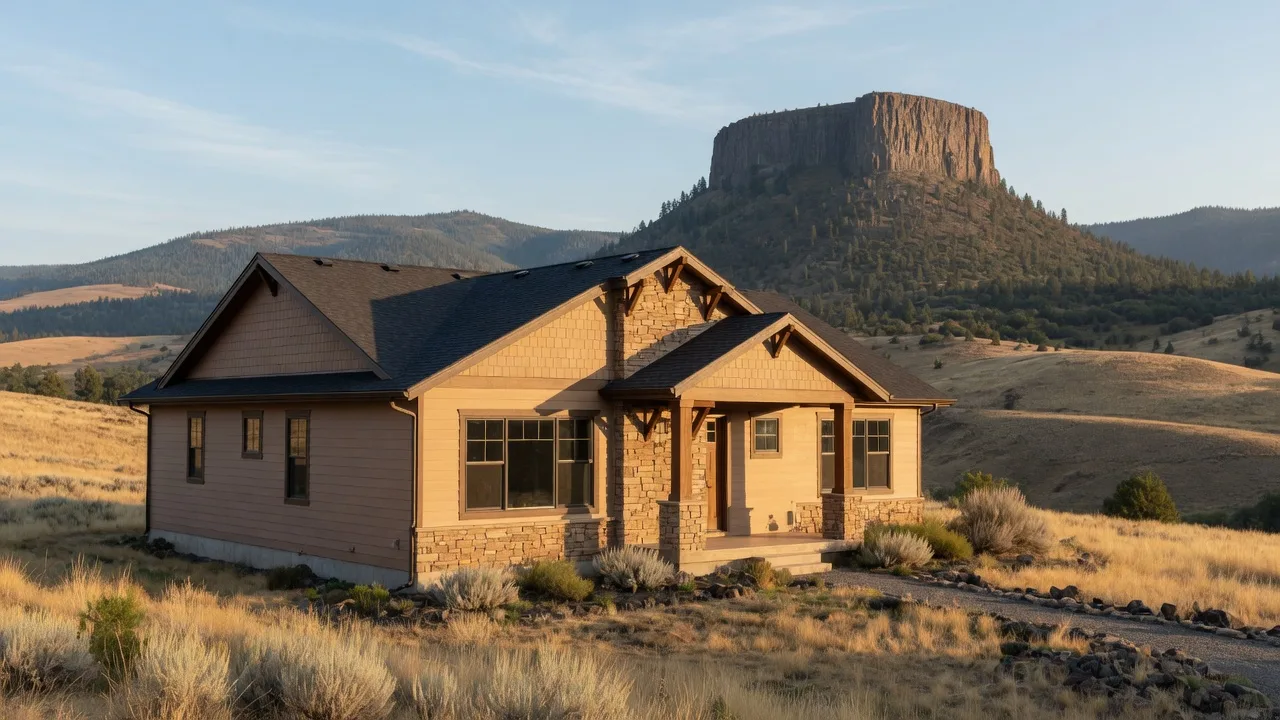
If you have been researching new construction in Southern Oregon, you might have noticed that wildfire keeps coming up in the conversation. That is because Oregon has spent the past few years building a statewide framework for wildfire-resilient homes, and that framework is now reshaping what gets built in our area. Here is what is changing, what it means for your new home, and what to look for when you tour a community intended to stand up to the Rogue Valley's wilder seasons.
The short version: Oregon is no longer treating wildfire resistance as an afterthought on new homes. A new ignition-resistant construction standard, a defensible space model code,and a statewide wildfire hazard map are all now in place, though how and where they apply depends on your city and county. For buyers, that mostly means better built homes, fewer surprises, and one more reason to ask good questions early in the process.
What Oregon's wildfire building code actually is
Oregon's wildfire building rules flow from Senate Bill 762, passed in 2021. The law directed the state to build a statewide wildfire hazard map, a defensible space model code, and home-hardening building standards. The pieces have landed at different times, which can make this feel complicated when you are just trying to compare builders. Let me break down what is actually in place as of late 2026.
The final statewide wildfire hazard map was released in early 2025. It classifies tax lots across Oregon as low, moderate, or high hazard and flags whether a property falls inside the wildland-urban interface, often called the WUI. Statewide, roughly106,000 lots, about 6 percent of all lots, sit in both the high-hazard zone and the WUI. Those are the properties most likely to be subject to the tighter requirements, though the exact rules that apply depend on where you are building. Knowing your lot's rating is one of the first practical things to check when you are choosing between communities.
The ignition-resistant construction standard
The building code piece is Section R327, Wildfire Hazard Mitigation, in the Oregon Residential Specialty Code. It describes how a home needs to be built to resist windborne embers, which is how most homes ignite during a wildfire. An amendment effective August 5, 2025, made R327 available for adoption by local jurisdictions for new single-family homes and new detached accessory structures. It does not cover apartments, commercial buildings, or additions and renovations. And here is the nuance that matters most for Southern Oregon: as of late2026, R327 is mandatory only where a city or county has chosen to adopt it.
Where it applies, R327 sets clear expectations. Roofs must meet at least a Class B fire rating, with Class A preferred, and no untreated wood shakes. Exterior walls must use noncombustible or ignition-resistant materials such as fiber-cement, brick, metal, stucco, heavy timber, or logs, unless an approved alternative like exterior gypsum sheathing behind the cladding, or a one-hour fire-resistive wall assembly is used. Vents need corrosion-resistant mesh no larger than one-eighth of an inch, or listed ember-resistant vents. Decks and other projections within 10 feet of the home must be noncombustible or ignition-resistant. And exterior windows must meet tested standards for wildfire exposure. These are the details that separate a house built to survive the ember zone from one that is not.
Defensible space: the land around the home matters, too
A fire-resilient home does not stop at the exterior walls. Oregon's State Fire Marshal finalized a statewide defensible space model code on May 19, 2026, giving local governments a consistent standard for how the land around a home should be managed. Built on the vegetation management principles of the International Wildland-Urban Interface Code, it centers on keeping a defensible space around the home, historically about 100 feet, with grass kept low, tree limbs removed up on taller trees, and an ember-resistant buffer closest to the home. As a model code, it is designed for cities and counties to adopt and enforce locally, so specifics can vary by jurisdiction.
What this means in Medford, Grants Pass, Eagle Point, and Jacksonville
The most practical thing to understand: whether these standards apply to your build depends on your lot's hazard rating and your city or county's local rules. The hazard map tells you whether your property is in a high-hazard area inside the WUI. Local governments decide whether to adopt R327,andthe defensible space code, and some areas already had wildfire standards before any of this existed. In Medford, for example, new homes in city wildfire-hazard zones, largely on the flanks of Roxy Ann Peak, have been required since about 2019 to use noncombustible or ignition-resistant exterior materials under the state residential code. That is a head start for buyers looking at Medford's hillside communities today.
In Josephine County, where Grants Pass sits, county regulations have included wildland-urban interface overlay requirements covering fire-resistant exteriors and defensible space, and local coverage under R327 was in the works as of 2026. In Eagle Point and Jacksonville, the same math applies: your lot's rating and local adoption determine what is required. The takeaway for buyers is simple: do not assume every new construction community builds to the same standard. When you find a home you like, ask directly whether the lot sits in a high-hazard wildfire zone and which ignition-resistant and defensible space requirements apply there. I look this up for my buyers on every new construction search, because it is the kind of detail that cannot be changed after closing.
Wildfire-ready building is already happening here
This is not just a conversation about future homes. Some of the most interesting new construction in our area right now is being built with wildfire resilience front and center. Take New Spirit Village in west Medford, near Jackson Creek Center. It is a roughly 87-home community designed for survivors of the Almeda Fire and other lower-income buyers, led by the Ashland-based Thalden Foundation. The original vision was for an all-3D-printed-concrete neighborhood, and construction has adapted to a mix of 3D-printed cement and conventionally framed homes, with fire-resistant cement walls as the core feature. Construction began in spring 2024, the first homes opened in August, and pricing targets roughly $185,000 to $235,000 with no money down. It is a reminder that wildfire-resilient new construction can also be attainable new construction.
There are other signs of this trend, too. Better Built Construction, based in Medford, was reported in May 2024 as the first company in Oregon building homes,and apartments with fire-resistant Techpanels, preframed panels designed to resist fire, in the Rogue Valley. And in the Talent area, builders have roughly100 energy-efficient, fire-resilient homes under construction, supported by Energy Trust builder programs and funding from Oregon Housing and Community Services. Those homes are part of the larger story of how the valley is rebuilding after the Almeda Fire, which I wrote about in my guide to Talent and Phoenix new construction. Each of these projects shows what is possible when wildfire resilience is part of the design from the start.
Questions to ask before you sign
Here are a handful of questions I suggest every buyer ask when touring new construction in Southern Oregon, regardless of where the community sits.
Is this lot in a wildfire hazard zone? Ask whether the site falls in a high-hazard area inside the wildland-urban interface,and what that means for construction materials and landscaping requirements there. Some builders know this off the top of their heads; others do not, which is itself useful information.
Does this city or county apply R327? If your area has adopted the ignition-resistant standard, expect noncombustible exteriors, rated roofing, ember-resistant vents, and properly detailed decks. If it has not adopted it, ask what wildfire standards,and assurances, if any, apply to this build and get any promises in writing if it matters to you.
What does the homeowners association allow for landscaping? Defensible space works best when part of your yard keeps grass low, vegetation spaced, and trees limbed. Make sure your community's rules actually support that kind of maintenance, and find out whether it falls on you or on a common-area service.
How will the wildfire features affect my insurance? Ask your insurance agent about the materials, roofing, and defensible space you can expect on this home,and what they mean for your coverage options. The answer can vary by carrier andby community, so it belongs on your list before you commit, not after.
What is included in the base price? Fire-resilient materials like fiber-cement siding, Class A roofing, and metal accents are increasingly standard on new builds, but builders differ in what is included versus priced as an upgrade. A quick look at the specifications sheet, ideally with your agent, saves you from sticker shock atthe design center later. And while you are reviewing specifications, remember that Oregon's newer energy codes also raise the bar on efficiency: I covered heat pumps, solar requirements, and the broader energy code updates in separate guides worth reading alongside this one.
Good news for buyers, with one caveat
For buyers, the shift toward wildfire-resilient construction is mostly good news. New homes in hazard-prone parts of Southern Oregon are increasingly built with materials and land management that give you a real head start on safety and peace of mind. That matters in a part of the country that has seen what wildfire can do. The rules differ by jurisdiction, sothat is the detail worth checking early, ideally before you fall in love with a floor plan. Knowing your lot's hazard rating, what your city or county requires, and what your builder is doing beyond the minimum puts you in a much stronger position atthe negotiating table.
Let me help you compare what is being built in Southern Oregon
I work with buyers across the Rogue Valley every day, and I look up the wildfire standards, hazard ratings, and builder specifications on every new construction search I do. Whether you are starting fresh or deep into the process, I can help you sort through communities, builders, and lots so you land on a home that fits the way you want to live. Reach out and let us make a plan.

Lisa Sears, REALTOR®, eXp Luxury
Serving Southern Oregon