
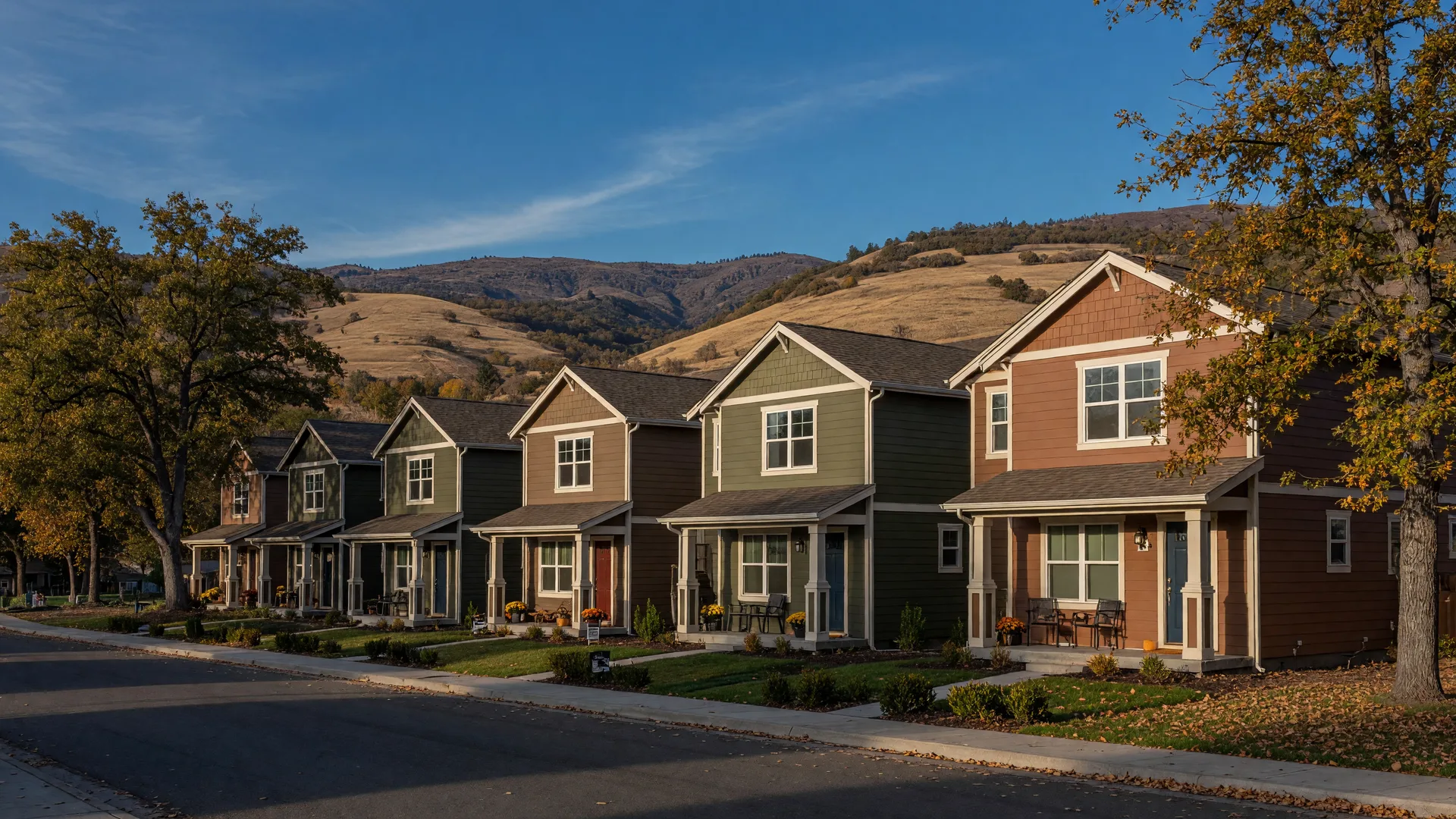
On October 21, 2026, the Grants Pass City Council voted unanimously to adopt development code amendments that bring Oregon's middle housing land division rules into the city's code. In plain terms, the change makes it possible for homes like duplexes, triplexes, townhouses, and cottage clusters to be divided into individually owned lots, so each unit can be bought and sold on its own. If you have been researching new construction in Grants Pass and wondering when options beyond the detached single-family home might reach the market, this is a meaningful step forward.
The amendments fold the state requirements in House Bill 2001 and Senate Bill 458 into Grants Pass's own development review process. According to the Grants Pass Tribune's coverage of the October 21 meeting, the adopted changes cover procedures for applications, zoning, lot creation, access, and utilities, and the city's Community Development director, Bradley Clark, said the intent is to align local rules with the state statutes. It was one of several housing measures the council advanced that night, and it is the kind of quiet policy work that rarely makes headlines but changes what gets built over the years that follow.
What is middle housing, exactly?
Oregon law defines middle housing as the five housing types that sit between a detached single-family house and a large apartment building: duplexes, triplexes, quadplexes, townhouses, and cottage clusters. They are smaller in scale than apartment complexes but put more homes on a block than traditional single-family lots, which is why planners see them as a bridge between the two.
The state's middle housing law, House Bill 2001, passed in 2019. It requires every Oregon city with more than 10,000 residents to allow a duplex on residential lots, and it requires large cities, those above 25,000 residents, to allow all five middle housing types in residential zones that permit detached single-family homes. Grants Pass fits the large city definition. The 2020 Census counted 39,189 residents, and the Census Bureau's most recent estimate puts the population at about 39,239. So middle housing has been legal to build in Grants Pass's single-family zones for more than four years now. What changed on October 21 is the ownership side of the equation.
What the October 21 vote actually changes
Under HB 2001 as it was first written, a builder could construct a duplex or a row of townhouses, but the law left a practical question unanswered: how the buyer actually owns the unit. Senate Bill 458, passed in 2021, answered it. It requires every city subject to HB 2001 to allow the lot beneath middle housing to be divided so each dwelling can be owned individually, the way a detached home is owned, rather than everyone sharing one undivided interest or operating under a condominium regime. The state requirement applies to land divisions applied for on or after June 30, 2022.
The Grants Pass ordinance adopted October 21 makes that state right locally usable. It adds the application procedures, zoning standards, lot creation rules, and access and utility requirements into the city's development code, so a builder or homeowner can go through the city's process and actually get a middle housing division approved. The state's implementing rules, known as OAR 660-046, frame the details with one especially buyer-friendly guardrail: a city cannot set a minimum lot size for middle housing that is larger than what a detached single-family home requires in the same zone.
Two limits keep the change from being a free-for-all. First, dividing a lot does not create any new units. It changes who owns the units that are already approved, nothing more. Second, the housing type approved for the property does not change, so a parcel approved as a triplex stays a triplex through the division. The legal structure changes, not the entitlement.
Why this matters if you are shopping for a new home
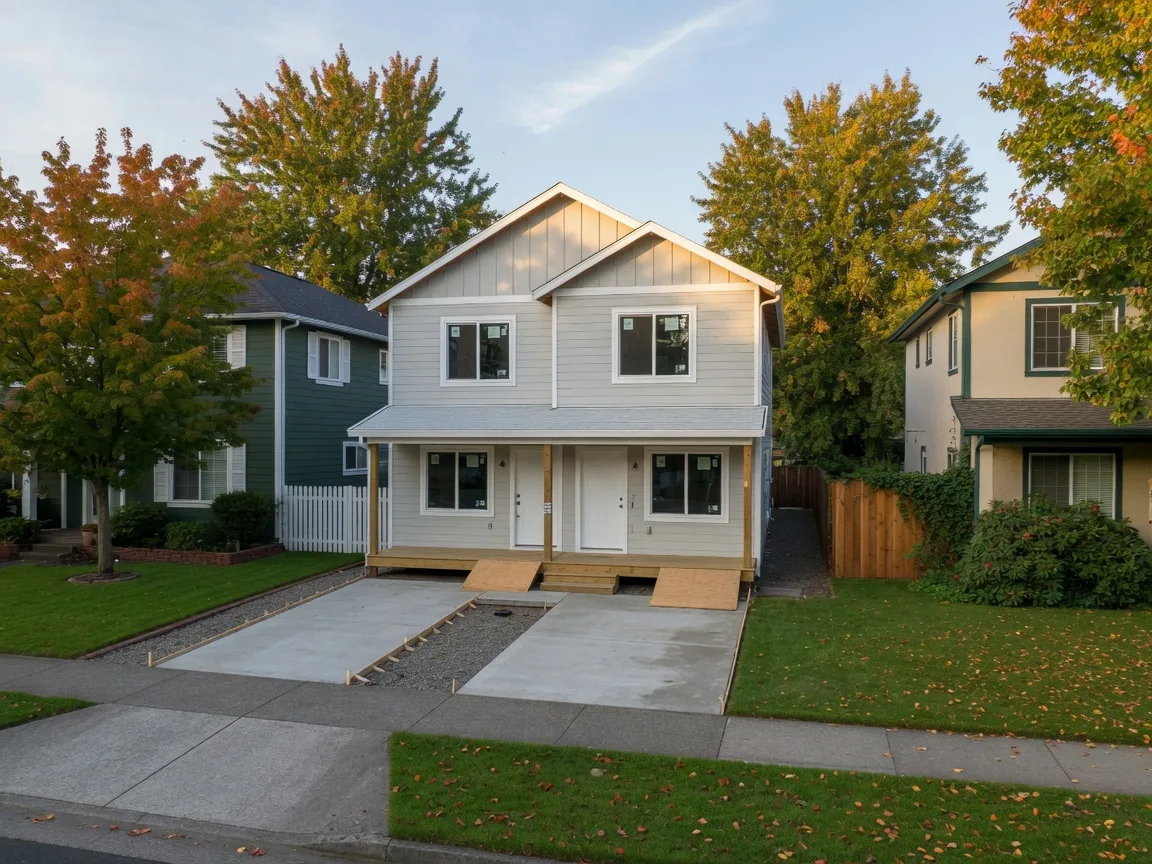
The practical effect is a new ownership option in Grants Pass: a fee-simple attached home. If a builder puts four townhomes on one lot and then divides it, you can buy your townhome with a deed to the land beneath it, your own tax account, and a mortgage on a detached-style title rather than a condo loan. That distinction matters for financing, insurance, and resale, and it is exactly why the state pushed for these rules in the first place.
Middle housing also tends to land at a more attainable price point than the detached homes around it, because the footprint and the land share per unit are smaller. That makes it genuinely interesting to two groups: first-time buyers who want a manageable mortgage, and empty nesters who want a smaller, newer home without giving up ownership of the ground under their feet. A triplex unit or a townhome built to today's energy code can carry lower utility bills and lower maintenance than a large single-family house, at a price that production builders can often hit more easily.
There is a supply angle too. When a city allows more homes per lot in existing neighborhoods, it stretches buildable land further without waiting for urban growth boundary expansions. Over time that means more total housing in the communities people already live in, which is quietly good news for buyers who want to stay close to schools, downtown, and the parks they already use.
What the new rules do not do
A permissive code does not build a house. The ordinance unlocks a legal structure; it does not create inventory, and it does not set prices. The new construction market in Grants Pass today is dominated by detached single-family communities, from Northridge Homes and Valerian Homes to the smaller local builders I profile in my Grants Pass new construction guide. It will take builders making the business decision to develop attached product before buyers see new townhomes and triplexes in any quantity, and nobody can honestly promise what that timing looks like or what the finished homes will cost.
The change also does not retroactively rezone existing neighborhoods. It applies to development applications that go through the city process under the updated code, which means the first visible results will come with the next round of projects rather than overnight.
What is already stirring in Grants Pass
The early signals are already visible. A 22-unit townhome community has been proposed at 1885 Hubbard Lane, on two general commercial lots totaling about 2.12 acres, and a city pre-application is already in place. It is early in the process, and plenty can change between a pre-application and finished homes, but it shows developers are testing attached housing in Grants Pass right now. It is a separate project from the affordable Allenwood Village development off Williams Highway, which is mostly attached units as well and is being built in phases with city and state support.
Across the county line, the closest proof of demand is The Talons in Eagle Point, the gated townhome community that has been selling steadily. Buyers in the Rogue Valley have already shown they will choose attached new construction when the product and the location are right. Grants Pass is simply positioning its code so that kind of product can be sold here unit by unit when builders are ready.
What to ask when attached new construction reaches the market
Ask how the units will be titled. Fee-simple ownership with a land division is different from a condominium regime, and it changes financing, taxes, and insurance. If a sales agent cannot explain which structure applies, get it in writing before you sign anything.
Read the governing documents even when there is no condo regime. Townhome developments usually carry covenants, conditions, and restrictions, and often an HOA for shared walls, roofs, driveways, and common areas. Know the dues, the reserves, and who is responsible for what before you fall in love with the floor plan.
Compare the total cost of ownership, not just the price. New construction in Oregon now meets a much stronger energy code, with better insulation, windows, and HVAC, which I explain in my guide to Oregon's energy code. A smaller attached home built to that standard can mean meaningfully lower utility bills than an older larger house at the same mortgage payment.
Tour what is selling today while you wait for the new product. Northridge, Valerian, and the other active builders have real homes to walk through in Grants Pass right now, and my community guide lays out the current inventory. Seeing what is available helps you compare fairly against the attached options that may come later.
Bring your own representation from the first conversation. When a new community opens, the sales office represents the builder, full stop. A buyer's agent who knows Grants Pass and understands new construction contracts makes sure someone is watching your side from the first visit through the final walkthrough. If you are newer to this process, my step-by-step guide to buying new construction walks through the contract, inspection, and timeline details.
And if you are wondering whether this trickles up to pricing, keep expectations grounded. The rule change is real and useful, but it is one ingredient in a much bigger market picture. I cover the current numbers in my fall 2026 market roundup, and I am happy to walk any of it through with you in person.
Let us put together your Grants Pass plan, for today and for what comes next
Whether you want to tour the communities selling in Grants Pass right now, understand how a fee-simple townhome would actually be financed and titled, or simply talk through what new construction should cost you in 2027, I can help you sort it out. I know the market, I know the builders, and I have followed this code change from the beginning. Reach out and let us make a plan.

Lisa Sears, REALTOR, eXp Luxury
Serving Southern Oregon