
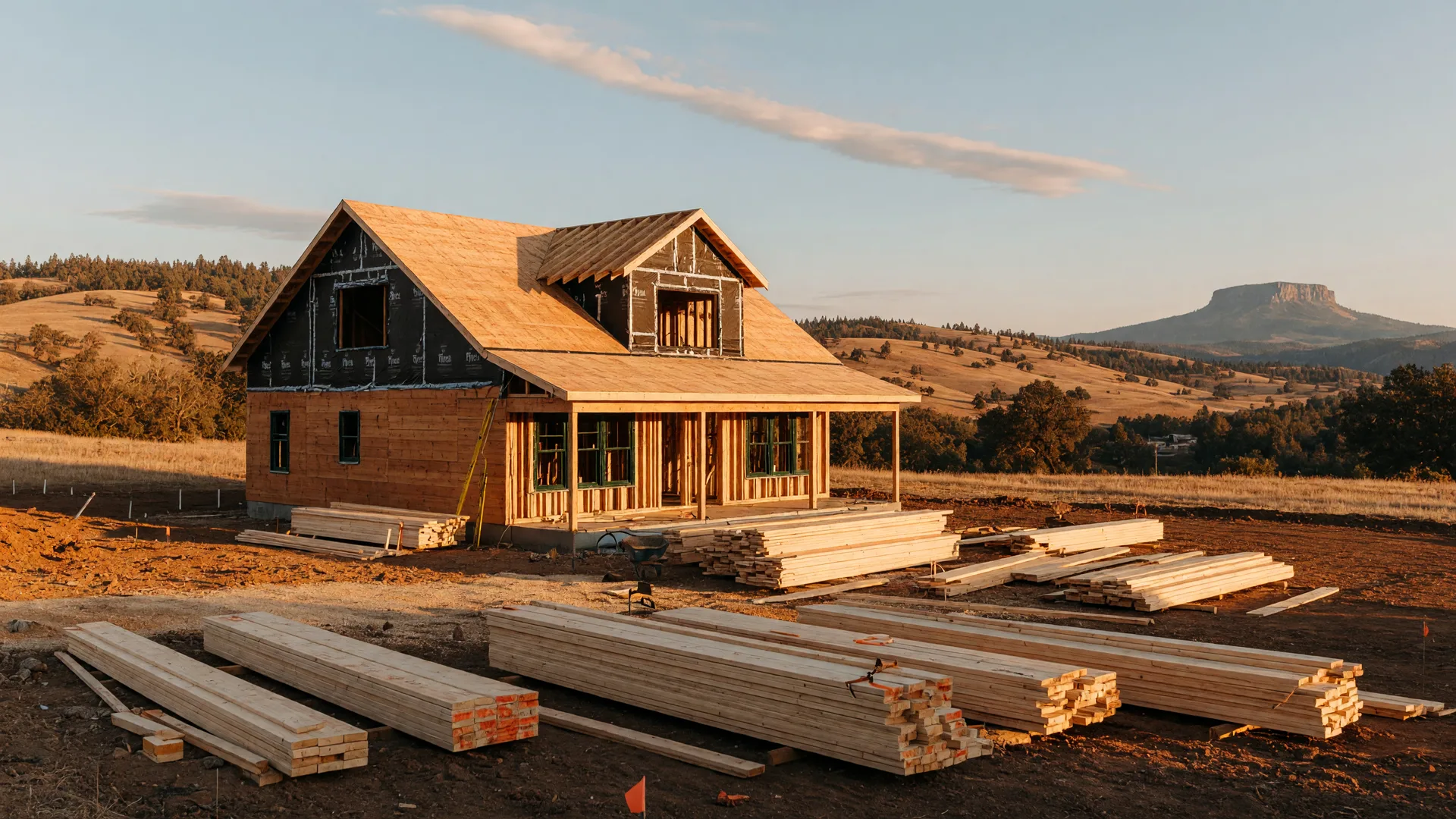
So you want to build. Not buy a production home off a floor plan, but pick a piece of land and put your own house on it. A custom build is one of the most personal ways to buy real estate in Southern Oregon, and it is also the one that asks the most of you upfront. Here is what I have learned helping buyers in Medford, Grants Pass, and Eagle Point weigh the land, the budget, the timeline, and the loan, so you can decide whether it is the right path for you.
The short version: a custom home in this valley typically takes about eighteen months to two and a half years from first plans to move-in, and the all-in cost often lands north of $300 per square foot once you count the lot. That is not a reason to avoid it. It is a reason to go in with clear numbers, which is exactly what this guide is for.
Is a custom build the right fit for you?
Custom building makes sense when one of three things is true: you cannot find the floor plan you want in the production communities, you already own land you love, or you want finishes and systems built exactly to your taste. It makes less sense when you need to move soon, when your budget is tight against the all-in numbers, or when you feel nervous about managing decisions for a year or more. None of those are judgments, they are just reality checks.
If you are still deciding between a custom build and a production home, my comparison of new construction versus existing homes and my step-by-step buying guide will help you line up the trade-offs. The rest of this post assumes you have decided to explore the custom path and now need the real numbers.
What land costs in the Rogue Valley
Land is where custom builds start, and it is also where price surprises live, because lot prices swing dramatically depending on location and services. In the Grants Pass area, raw land has averaged around $57,000 an acre, with typical 5 to 16 acre rural parcels listing from about $199,000 to $325,000. In Eagle Point, vacant lots vary widely, from modest in-town parcels to large acreage tracts, and new construction homes there start around $450,000 to $500,000 for finished product from builders like Holt Homes.
The single biggest driver of lot value in Southern Oregon is what is already at the lot line. A half-acre in-town lot in Medford or Central Point with city sewer, water, and paved access will cost far more than five rural acres with a well to drill and a septic design to approve. Country acreage looks cheaper on paper and often costs more by the time you add services, so always ask: sewer or septic, city water or well, paved or gravel access, and what the utility connect fees run.
One thing I repeat to every lot shopper: verify the zoning and the building envelope before you fall in love. Jackson County's building division tells buyers to start the whole process early, because land-use, floodplain, wildfire defensible space, access, and septic constraints can all shape what you can build on a given parcel. A lot that cannot support the home you want is not a bargain at any price.
What it costs per square foot to build
Building costs in Southern Oregon are usually quoted per square foot, and the range is wider than people expect. A Medford-specific breakdown puts construction at roughly $120 to $230 per square foot depending on finish grade: standard finishes around $120 to $150, premium around $150 to $190, and high-end finish work from roughly $190 to $230. Statewide estimates for Oregon tend to run higher, around $190 to $250 per square foot for standard construction, because averages pull in pricier metros.
Here is the number that matters most: the all-in cost including the lot. Recent new-built homes in Medford have averaged about $509,000, with a median around $460,000, for roughly 1,750 square feet on about a sixth of an acre. That works out to about $290 per square foot with land included. My rule of thumb for buyers is to budget from $300 per square foot up, all-in, and let the finish level and lot push the number higher from there.
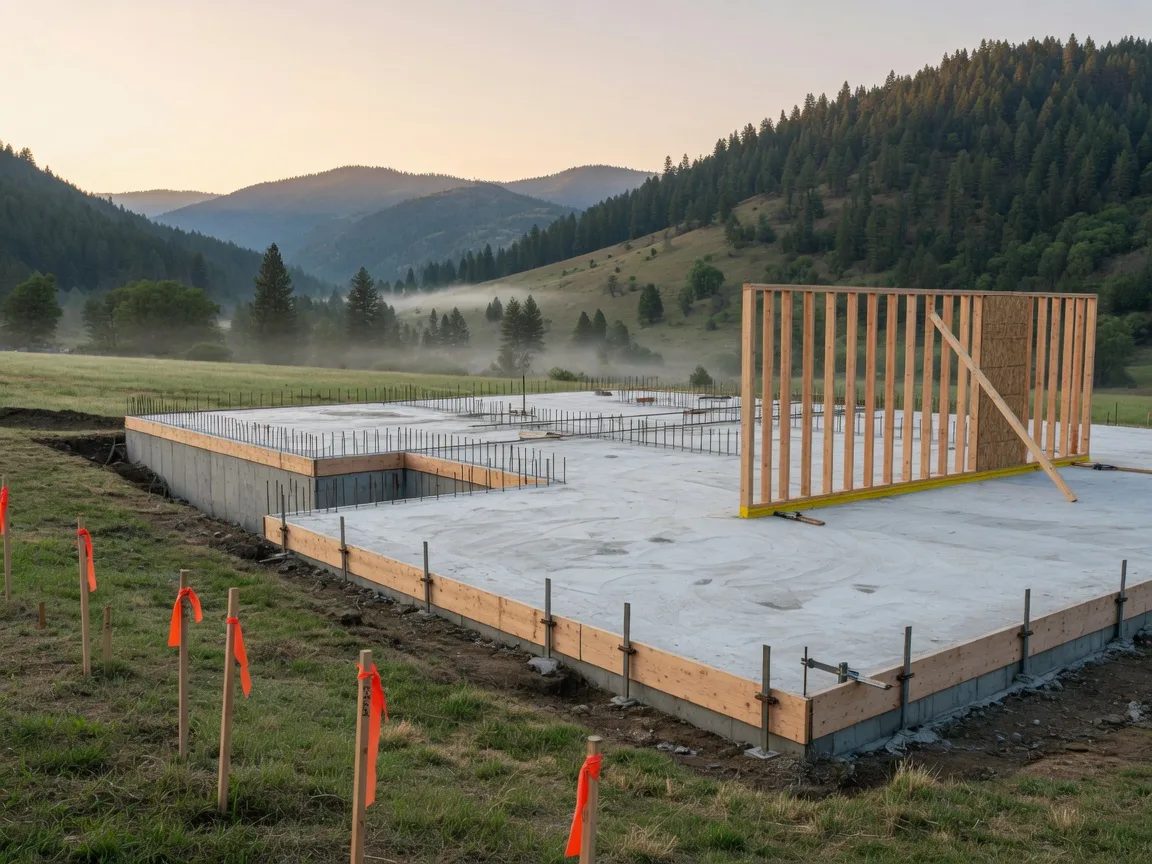
Whatever number you settle on, add a contingency of 10 to 15 percent on top. Site conditions, utility connections, and design decisions all have a way of adding cost mid-build, and a contingency is what keeps the project on track instead of forcing compromises at the end. I cover the full stack of new construction costs, from lot premiums to permit fees, in my guide to what new construction really costs.
How long a custom build really takes
A fully custom home in Oregon typically runs about 18 to 30 months from the first design conversations to move-in day. The part buyers underestimate is the front end: design, engineering, and permitting can consume six to twelve months before any foundation is poured. The construction itself is usually six to twelve months once the ground breaks.
The permitting side is friendlier than many people fear. The City of Medford's Building Safety Department reports a typical residential permit turnaround of about 14 days from application to issuance, and qualifying projects can use the Express Permit Program for same-day or as-little-as-three-day issuance. In unincorporated Jackson County, the advice is the opposite of rushed: start well ahead of your target date, because zoning approvals, access, and environmental reviews need lead time. County staff put it plainly, saying six months is not too far in advance to begin.
Southern Oregon weather shapes the schedule too. Winter rains can pause exterior work for weeks, so most builders plan foundations and framing for the dry season and the finish work through the fall. If timing matters to you, ask your builder how the calendar and the rainy season interact on your lot before you commit to a completion date.
How construction financing works
Custom builds are financed differently from home purchases. Most buyers use a construction-to-permanent loan, sometimes called a single-close loan, which covers the land and the build together and then converts into a standard mortgage when the home is finished. During construction, the lender releases money in stages called draws, as work is completed and inspected, and you typically pay interest only on what has been drawn while the house is being built.
A few practical notes from the buyers I have shepherded through this. Lock a rate that covers both the construction and permanent phases if your lender offers it, so you are not exposed to a rate move at conversion. Understand your draw schedule and how inspections trigger each payment. And budget for the interest-only payments you will carry during the build, because they are real out-of-pocket costs on top of everything else. If cash flow is a concern, ask your lender how much of the lot you can finance and what the carry costs look like month to month.
Custom builders to know in the valley
Southern Oregon has a deep bench of local custom builders, most of them smaller operations where the owner is on site and the reputation is personal. In the Medford area, buyers I work with regularly ask about Scott B. Owings Custom Homes, Rispoli Design & Build, Verity Construction, Girard Builders, and Southridge Builders. Kammerzell Custom Homes is another established name in the area.
My advice on choosing: interview at least three builders, tour homes they have actually finished, and ask every one of them for current clients you can call. A custom build is a long collaboration, so the fit matters as much as the portfolio. I am happy to point you toward builders whose work I have seen hold up over time, whatever your budget tier.
Custom homes follow the same energy and wildfire rules
Building custom does not mean building to a looser standard. Oregon's current energy code applies to every new home, custom included, which means modern insulation and windows, a heat pump on any new home with air conditioning, and an on-site renewable requirement that in practice often means solar. Those systems add to the build cost, but they also cut the monthly bills once you move in, which is worth remembering when the quote feels high.
Wildfire rules matter too, especially on rural lots. Oregon's ignition-resistant construction standards and the defensible space expectations can influence everything from exterior materials to how much clearance your lot needs. My guides to the heat pump requirement, the solar requirement, and the wildfire building code walk through each one in plain language, with the questions to ask before you sign.
Things to keep in mind before you purchase land
- Verify what can actually be built before you offer. Zoning, setbacks, floodplain, wildfire defensible space, septic feasibility, and access all shape your build. Jackson County's advice to start six months ahead exists for a reason, so get those answers before you commit to a lot.
- Price the services, not just the acreage. Rural land is cheaper per acre, but a well, septic system, and long driveway can add tens of thousands of dollars. Compare total cost to build, not cost per acre, across your lot options.
- Budget all-in at $300 per square foot or more. Medford's recent new builds have worked out to about $290 per square foot including the lot, and custom finishes push higher. Plan from that floor, with a 10 to 15 percent contingency on top of construction.
- Ask for a rate lock that covers both phases. With a construction-to-permanent loan, try to lock a rate that carries through conversion so a market move between foundation and finish does not change your payment.
- Check down payment help before you assume you cannot qualify. Oregon offers down payment assistance programs that can apply to new construction, and it is worth a conversation about whether your custom build can qualify. My 2026 guide to down payment assistance covers what is available.
A custom home is a bigger commitment than a production purchase, but it is also the path to a house that is genuinely yours, on land you chose, built the way you want it. The buyers who succeed at it are the ones who go in with honest numbers and a patient timeline. If you are ready to start looking at lots, or you just want someone to sanity-check the budget before you sign anything, that is exactly the kind of conversation I love to have.
Let me help you plan your custom build
I have walked buyers through every stage of this process, from comparing lots to vetting builders to structuring the loan. Whether you are ready to start touring land in Medford, Grants Pass, or Eagle Point, or you just want a clear-eyed read on your budget, reach out and let's map it out together.

Lisa Sears, REALTOR, eXp Luxury
Serving Southern Oregon